Showing posts with label Garden. Show all posts

Thursday, February 19, 2015

In the Garden: Savoy Cabbage and Kohlrabi


It's been so beautiful - except for Tuesday, of course.  That was an awfully dreary day, although I'm sure the rye loved it.  Hopefully the Snow Queen's blossoms didn't freeze in the cold spell last night.  The garden is put to bed under the cold-protection again.


The savoy cabbage was ready - it turned out not to be as sweet and flavorful as the red cabbage was, but it made a very nice head.  I still have five more plants - I have to plant more next season!  I tell myself this now when the weather is cool, but planting more will involved toiling in the August sun to build garden beds - I'll have to see if I really like cabbage that much then.


There's been much work on the summer garden.  All the solanaceous beds are built (tomatoes, peppers, eggplants, ground cherries).  That was nine long beds in all.  Now I'm working on the more forgiving number of squash, cucumber, and melon beds.  There's plenty of hay and manure to pick up from around where the cows' round bales were.


I pulled a couple of kohlrabi's for dinner the other night, not realizing what enormous vegetables they are (the bulbs looked so small!).  I've never grown them before.  Last year a fellow gardening friend of mine went on and on about how easy they are to grow, cook, pickle.  I cooked them up in some butter.  They made a massive pot of greens, and I liked the flavor (my family doesn't get very excited about vegetables) - sort of a strong broccoli taste.  They also add lovely color to the winter garden, so I'll definitely be growing them again next fall. 

Thursday, May 1, 2014

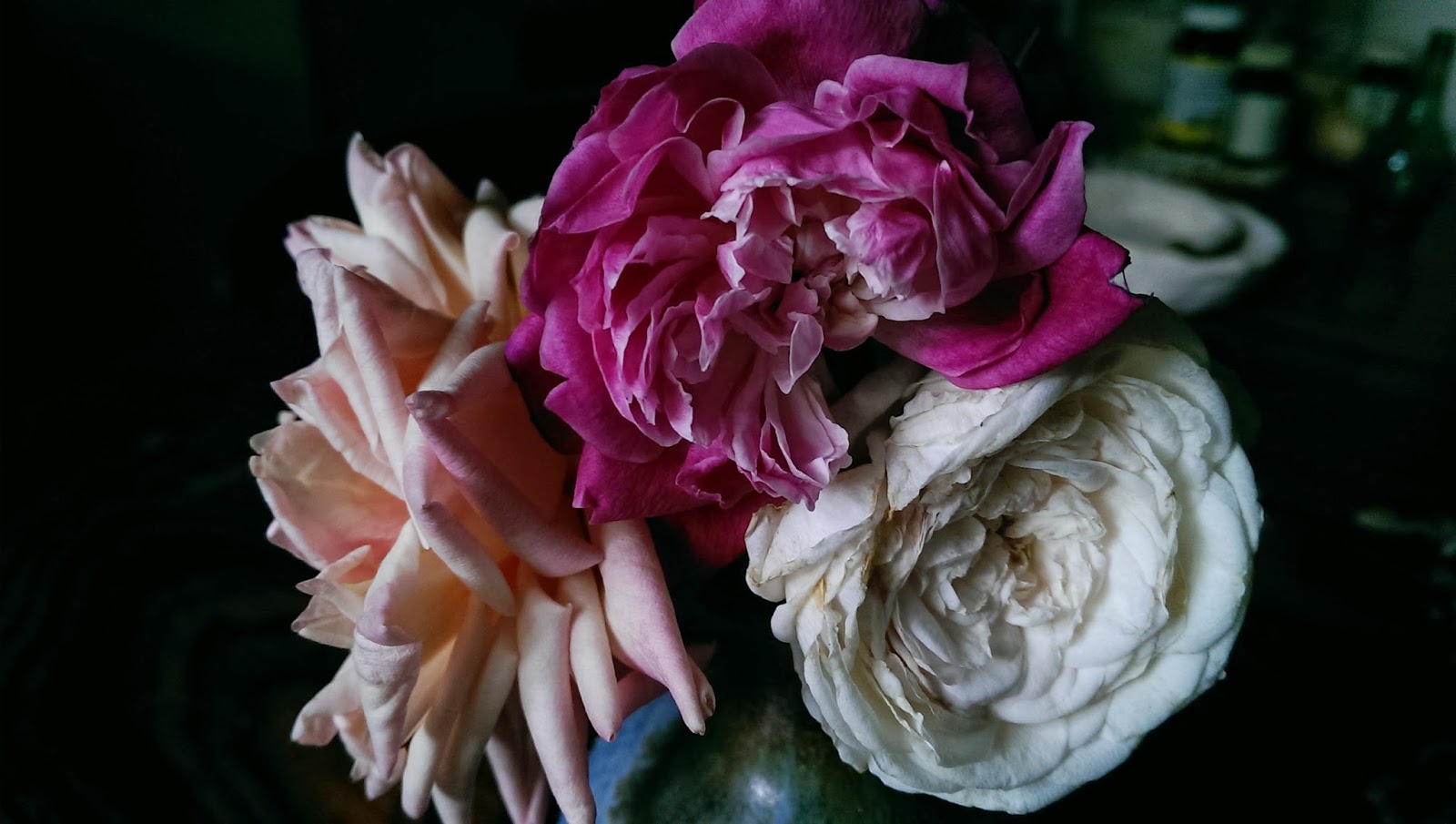
Roses - and a bit of a rooting tutorial


Last year my friend and I took cuttings of many heirloom roses.  She showed me a great method of rooting cuttings.  I've since tried it with figs and mulberries, too.  It works incredibly well and is very easy and low-maintenance (a must around here!).

All you need is a plastic ziploc bag and some potting soil.  The bag can be any reasonable size.  I've used the sandwich ones and also gallon size.  The important thing is that it can be sealed.

- Put 2-3 inches of potting soil in the bottom of the bag.

- Cut cuttings (for roses, about 3-4 inches), and strip off bottom leaves.  Poke the ends into the soil in the bag.

- Add a little water, but not too much.  You just want it to be moist, not damp.  The only cuttings I took that didn't start were because I added too much water.

- Gently blow in some air into the bag and seal it so that it has a pocket of air.  It will create a little rain forest-like environment.

- Leave it be for several weeks, either inside near a window, or outside somewhere sheltered from temperature extremes.  I occasionally check on them and blow more air into the bags.

- After about three weeks I start checking the bottom of the bag to see if roots have formed.  When I can see a lot of roots, I pot them up, tearing the sides of the plastic bag so I won't disturb the root system too much.  I put about three cuttings in each gallon bag, and only one or two in the sandwich size.  Two was a little crowded.

My roses have grown into 2-gallon pots now, and are blooming this spring.  It's been so fun to see what they are when they finally bloom.  Unfortunately, I didn't take notes or anything when I was taking the cuttings, so I have no idea which they are, except the St. David roses that are from my rose bush I already have.


Thursday, April 24, 2014

Summer Gardening Begins


The summer garden has been started!  It's like the first day of school putting the tomato starts out there - all by themselves and exposed to the elements and the harsh, cruel world.  I worried about them, but they survived the latest gusty cold front and are putting on some new growth already.  The eggplants had a close scrape.  The sprinkler was badly adjusted, and they weren't watered in well enough, but even they seem to have recovered and are settling in nicely.


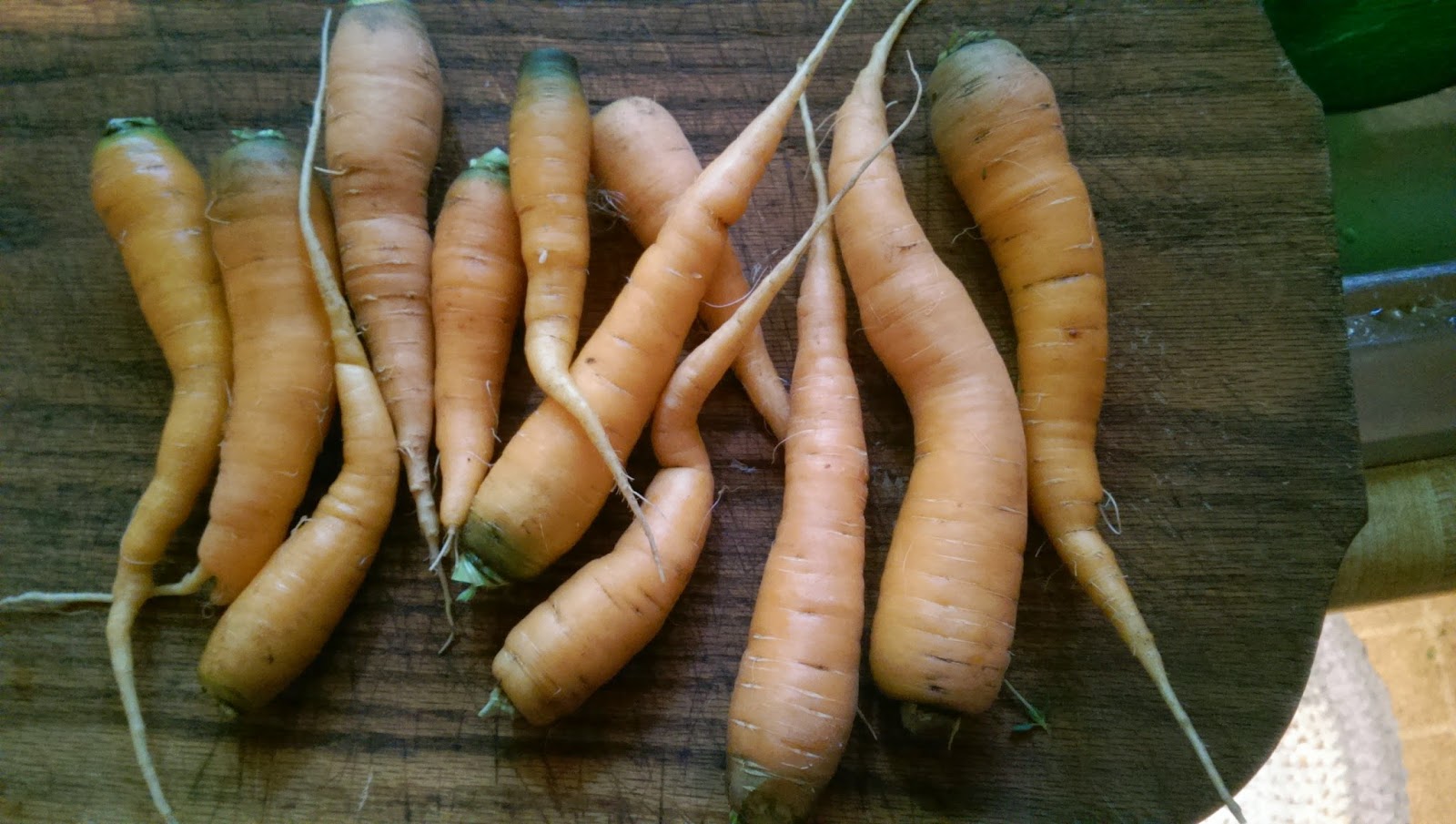
We also got a crazy corkscrew carrot from the winter garden!  I still can't believe how nice the carrots are this year.  They look like sumo wrestlers compared to the usual pencil-thin-and-nubbly ones we've always grown.


I really want to grow all of our vegetables this year.  Organic vegetables these days are so freaking expensive, and now that I've been spoiled by having a lot of garden fresh vegetables, I can hardly even bring myself to eat the ones in the store.  They are so soggy and over-handled, and such a far cry from being able to be simply sauteed in butter with salt and pepper to bring out their flavor, because there just isn't much there to bring out.  After a season of mostly store veggies, with occasional bunches of broccoli, arugula and greens from the garden - I'm inspired!

Thursday, April 10, 2014

Garden Update


The winter garden is still giving us small bits of edibles here and there.  Radishes - that really needed to be picked earlier, but oh well - and carrots!  They are ugly, stunted carrots, but here in Florida we will take what we can get.  And the kale!  Out of my garden?  I've longed for garden-fresh kale for years now.  It kept freezing, even the Siberian kale.  The kale and carrots went into a stew, and the radishes were on the side with butter.
We also managed to show extreme self-restraint and managed to bring some sugar snap peas home with us instead of devouring them off the vine.


I've started bringing my summer starts out to get used to their permanent home.  They are all doing very well.  I watered them with some Desert Dynamin clay mixed into the water after bringing them out, and I think they liked that a lot.  Notice all the flowers starts!  I hope it is a beautiful garden this year.


There are many more tomato starts to bring out still.  I even custom started some tomatoes and peppers for my neighbors down the street.
Planting time is coming up this weekend!


Wednesday, May 9, 2012

Garden Update


It's been awhile since I've posted anything.  It's the usual excuses.  I thought I would finally write about the garden again, but gardens grow fast, and it has already grown in the two weeks since these pictures were taken.  We finally put the corn in, and it is several inches high by now.  That's in the middle bed, right above the big green patch.  The green patch will be sweet corn by and by.  We are trying more organized succession planting with the corn this year.


Most of the tomato plants are thriving.  At the moment they have green tomatoes on them.  Tomatoes always take so long being green.


The peppers are doing wonderfully this year, and are blooming and setting fruit.  The hot peppers seem to be growing faster than the sweet peppers.


Most of the eggplants survived, and the Turkish Orange eggplant is already blooming.  I was surprised--last year the eggplants only started producing in late July.


The tomatillos and ground cherries have set lots of fruit, it's only a matter of waiting for it to be ripe.  My kids couldn't stand it and picked a few bitterish under-ripe ones the other day, but they still enjoyed eating them, even though they didn't taste as good as they would have.  I love that about gardens.  Even if it isn't the best, just having grown it and having it right there makes you appreciate it more.


This year, the weather turned very warm very quickly, and so we are struggling much more with the weeds than in previous years.  Inadvertently, this year's garden has become a blend of last year's organized row garden and the previous year's wild garden.  None of the sunflowers I had planted this year are blooming yet, but last year's have re-seeded.  It's really interesting to see how they cross-pollinated, or didn't.  We left most of the sunflowers when we tilled and planted, so they are big and blooming and making the garden very colorful.  One thing I've noticed about sunflowers (and is the main reason I plant them) is that there is something extremely attractive about them to all sorts of insects.  Just one sunflower plant has an ecosystem of different interacting insects on it.  I've seen wasps, assassin bugs, lady bugs, aphids and the sap-sucking true bugs and ants tending the aphids and all sorts of different kinds of bees.
Not only do they attract the beneficial pollinators and predators, they seem to keep the true bugs that in past years would attack my tomatoes and make nasty black dents in them from wanting to go anywhere else.
Other plants that have re-seeded are the zinnias, the cosmos and the Spanish needle.  The Spanish needle (Bidens alba) is very weedy, but in the richer garden soil it does become highly ornamental, and there's not a second of the day that they aren't just buzzing with an incredible diversity of bees and butterflies.


The bad news is that three weeks ago when there was a minor cold snap, the cucumbers, European melons, squash and pumpkins got frosted.  We were completely surprised--it being probably the only place in the county that got frost damage that night (supposedly it only got to 40F).  Strangely, the sweet potatoes, okra, peppers, eggplant, watermelon and cow peas were all fine.  The melons and pumpkins have recovered, but the cucumbers and summer squash have been significantly delayed.  By my April birthday last year we had tons of summer squash and cucumbers, but this year they have only just started making some female flowers at last.  They are usually the first vegetables we get, so we are still buying vegetables from the store now, and my goodness they are expensive.  It's just amazing how much they mark up things like organic zucchini.  Usually we are desperately trying to give zucchini away.
Anyway, the moral, I think, is that every year is different.  Just when you think you've finally figured something out, the Weather Gods thumb their noses at you.

Wednesday, March 28, 2012

Starting the Summer Garden


We started the summer garden this weekend!  It's later than most people put their gardens in around here, but a week earlier than last year, when we still had a light frost a week after planting the tomatoes.  We seem to be in an odd micro-climate that gets much colder than other places.  The winter temperatures are closer to that of Monticello, near Georgia, than anywhere close by.


We put in 236 tomato plants, 25 tomatillos and ground cherries and 93 peppers and eggplants, and a bunch of different kinds of basil.  I didn't mean for there to be quite so many.  Last year we only had a single double row of all of those combined.  I only actually started five of each variety, but because the seeds were so old, I started two in each pot, just to be sure we would get one.  Most of them sprouted, and I didn't pinch off the extra ones like you're supposed to, because they looked so little and hopeful.  I had planted them on opposite sides, so it was easy to separate them when I transplanted them.  Most of them look like they are doing well.  A few of them didn't like being separated, but they were the runty little ones, anyway.


I've had a tricky time fitting everything into my garden plan as well as rotating things to places they haven't been for three years.  These were the best spots for the Solanaceous plants.  Next weekend we put in the cucurbits--the melons, watermelons, squash, pumpkins and cucumbers.  I know it doesn't look like much yet, but it's a start!

Wednesday, March 21, 2012

Possibilities


Yesterday I laid out all my summer garden seeds (well, most of them).  I had to stand on the couch to fit them in the picture.  Some of these are flowers and basil varieties, and a lot of them are cowpeas or dry beans that I'm intending to plant in long rows here and there as borders, and so won't take up much space.  Ethan hates how many varieties we have, but I think it's interesting.  He says it gives him heart palpitations.


 We have the nicest collection of melon varieties this year!  The melons were so fabulous last year.  It was such  a delight to eat so many sweet, delicious homegrown melons.  I really hope we get at least that many melons this year.  I'm trying a new kind of watermelon--Gold Baby.  It turns yellow when it's ripe, which would be helpful.  We wasted a few watermelons last year thinking they were ripe and they weren't.  It's so fun to plan gardens, but it never ends up being planted the same way as in my plans.  It doesn't really matter, as long as we get a lot of melons and ground cherries.


More tangibly, I re-potted my tomatoes.  They are already twice this big, as this was from last week.  I think we are going to start putting the garden in at the end of this week.  Ethan has promised to help me with the garden this year, but I have my doubts.  Last year he actually tilled the garden, so there might be hope.  This year he promised to plant the corn and the peppers, but I already had to start the peppers for him so we would get any at all this year.

I recently re-potted them, too.  They seem to be happy.  Last year I tried leaving them in pots in the garden and they nearly all died, so we only got a few really hot peppers, the sweet peppers having withered early in the summer.  I love how much possibility there is in just one seed.

Tuesday, November 8, 2011

First Turnips

 The turnips I had planted back in September are now ready to pull.  This year I read about planting turnips and discovered they need a shocking amount of space between the plants, like 6-12."
All this time I had thought my turnips were pathetically tiny because the soil was so poor, but it was probably because I just planted them in a big blob and didn't bother to thin them.  I was very surprised to find big turnips in my garden this year.
 The Scarlet Ohno Revival turnips I had gotten seeds for from Southern Exposure Seed Exchange were pink inside.  They remind me of choggia beets.


Since we have quite so many greens right now, I decided to ferment the turnip greens for the animals.  I got out this amazing crock I inherited from my grandfather, who used it to make kraut.  It's probably almost a hundred years old, and I've never used it before.  It sat in our garage with tools in it for more than a decade. I had no idea what it was, but now I shudder to think that I might of cracked it in my careless ignorance.  Rose was happy to help salt and mash the greens to make a brine.  I used the sea 90 livestock salt.


Mirin even started to help, and things were getting pretty crowded at the end.

I put a plate on top to weigh the greens down.  We'll see how it turns out!!

Wednesday, November 2, 2011

The old summer garden


We keep the garden by halves, so that each season the land gets a rest.
The summer half of the garden has been interesting this year.
Even after the goats and cows trampled and munched their way through it, it became a wild tangle.  Roguish hybrid cucumbers, sunflowers, tomatoes, melons, dent corn and amaranth seeded themselves rampantly.  The dent corn even tasseled and bore little ears.  The zinnias became monstrous.


At it's peak, my children would get lost in the overgrown grass and weeds.


The Roselle is flowering its strange and lovely flowers.


Massive Spanish needles have taken over in places, each a humming and vibrant ecosystem, alive with many different kinds of bees, flies and butterflies and things that eat them.  I saw at least 5 different types of bees nectaring one day, and not a single one like our honey bees.  Just one of these bidens bushes is at least 10 feet across.

It's a jungle out there.

Friday, September 23, 2011


The Roselle is blooming!  I've been drying bunches of it.
It's the first year the Roselle has survived long enough to produce anything.  And it really has survived.  I haven't watered it at all since the rest of the summer garden died back, I think in late July.  And then when the animals were in I had put up a strand of non-zappy electric netting fence to keep everyone off the Roselle and just eating the weedy old garden.  But guess where we found Miss May's head stuck every single day they were in there?

Every day we would come out and hear a miserable "Maaaaah!" and see May stuck, once again, in the netting around the Roselle, surrounded by luscious green things to eat on the outside of the netting, but determined only to entirely devour the forbidden plants.  (She's lucky it wasn't electrified!)

One day she peed for nearly 5 minutes after we had struggled to free her little empty head from the layers of fence, I guess she hadn't been able to all day while she was stuck.  You'd think she would have learned, but no.  Weeks later we put the animals back in just for one day because of a crazy fencing problem we were having, and sure enough, May was stuck again.  She managed to strip a bunch of the plants, but they came back and are blooming, along with the unscathed ones.